


Federal Pacific and Zinsco Breakers: Why Inspectors Flag Them
Home inspectors and insurance underwriters flag Federal Pacific breakers and Zinsco panels because both have a documented history of breakers that fail to trip when a circuit is overloaded or shorted. A breaker that doesn't trip leaves the wire carrying more current than it was built for, and that's how a panel problem becomes a fire in the wall. If your Pittsburgh house was built or rewired between the 1950s and the early 1980s, there's a fair chance one of these names is on the panel door, and the fix is a panel upgrade from a licensed Pittsburgh electrician, not a new set of breakers.
Short answer: Federal Pacific Stab-Lok and Zinsco panels were never recalled, but the trade treats them as defective. Inspectors write them up, many insurers won't bind a policy until they're gone, and the only real fix is replacing the panel.
Why Federal Pacific breakers got their reputation
Federal Pacific Electric sold Stab-Lok panels and breakers from the 1950s into the early 1980s, and they went into a huge number of postwar homes. The "stab" is literal: each breaker has a stab that pushes onto the bus bar instead of bolting to it. That connection is one weak point. The breaker mechanism is the bigger one.
In 1983 the U.S. Consumer Product Safety Commission closed a two year investigation into FPE Stab-Lok residential breakers. Its testing confirmed that the breakers failed certain UL calibration test requirements, but the agency said it couldn't afford the testing needed to tie those failures to actual fires, so it closed the file without a recall. That's why you'll hear "FPE was never recalled" from someone talking you out of replacing one. Not recalled and safe are not the same thing.
The field record matches the lab. Stab-Lok breakers jam in the on position, trip internally while the handle still reads on, or never trip at all, and the two pole breakers feeding dryers, ranges and water heaters are the worst. Pull the cover on an old FPE panel and you'll often find scorched bus stabs and breakers loose enough to wiggle by hand.
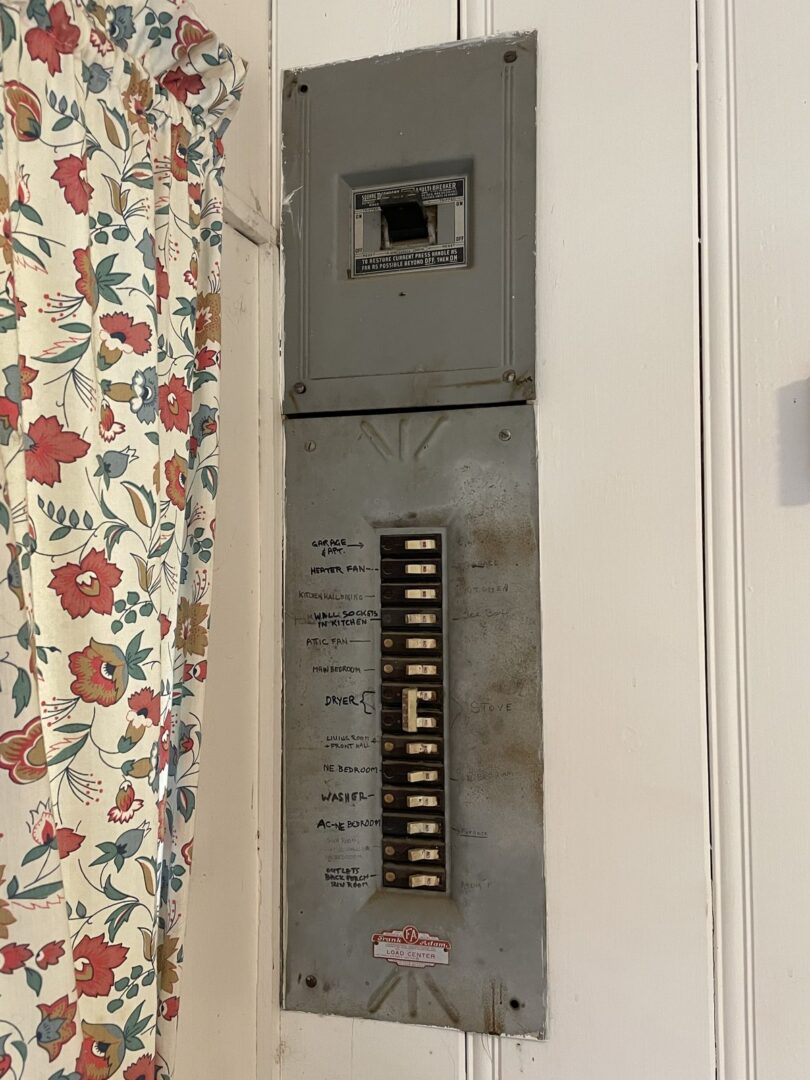
A Stab-Lok panel is easy to spot once you know the tells. The door label says Federal Pacific Electric, Federal Pacific, Federal Pioneer or FPE, and the word Stab-Lok usually appears inside the door or on the breakers. The handles are the giveaway: most have a red stripe or red tip on the end, and the breakers are narrow with a distinctive snap in fit.
An older breaker panel with the dead front off. The condition of the bus bar and the breaker connections tells an electrician more than the label on the door.
Photo: Circacies, CC BY-SA 4.0, via Wikimedia Commons
Zinsco breakers: a different failure, the same result
Zinsco was a West Coast manufacturer whose panels ended up in houses nationwide after GTE-Sylvania bought the company in 1973, so the same panel might be labeled Zinsco, Sylvania, GTE-Sylvania or Magnetrip. They were common through the 1970s.
The problem with Zinsco is the bus bar. Many Zinsco panels used an aluminum bus, and the clip style breaker connection to that bus loosens over time. A loose connection arcs, arcing makes heat, and heat corrodes the bus and the breaker contacts. The end stage is a breaker whose contacts have fused to the bus: the handle flips to off, the circuit stays live, and no overload will ever trip it.
Many Zinsco breakers have brightly colored handles in red, blue, green or teal, which is unusual in a residential panel. With the cover off, the bus usually shows corrosion or melted spots where the breakers clip on.
What a home inspector writes, and what an insurer does with it
Home inspectors in Allegheny County routinely call out an FPE or Zinsco panel and recommend evaluation by a licensed electrician. Inspectors don't pull breakers or test trip curves. They identify the brand, note visible scorching, and flag it. The buyer's agent then asks for a credit or for the panel to be replaced before closing.
Insurers care because a panel that can't interrupt a fault is a fire claim waiting to happen. Practices vary by carrier, but the common outcomes are a refusal to write a new policy until the panel is replaced, a requirement for a licensed electrician's letter confirming replacement, or a non renewal notice after a routine inspection turns the panel up. If you're buying in Mt. Lebanon, Bethel Park or McCandless and the inspector found one of these panels, get the insurance answer before you waive contingencies.
When we evaluate a flagged panel we look past the brand. We check for heat discoloration on the bus, loose breakers, double tapped breakers, aluminum branch wiring, missing knockouts, and whether the panel is rated for the service feeding it. Water staining from a damp basement wall or a leaking service mast is common in older Pittsburgh houses and makes a bad panel worse.
If the panel is FPE or Zinsco, our recommendation is the same every time: replace it. We don't rebuild these panels or swap in replacement breakers, because the bus and the breaker design are the problem, and new breakers on an old corroded bus don't change that.
Federal Pacific and Zinsco side by side
| What to check | Federal Pacific Stab-Lok | Zinsco |
|---|---|---|
| Names on the door | Federal Pacific Electric, Federal Pacific, Federal Pioneer, FPE, Stab-Lok | Zinsco, Sylvania, GTE-Sylvania, Magnetrip |
| Breaker handles | Red stripe or red tip on the handle | Brightly colored handles, often several colors in one panel |
| Years installed | 1950s to early 1980s | 1950s through the 1970s |
| Main failure | Breaker fails to trip or jams in the on position | Breaker clip loosens on the aluminum bus, arcs, and fuses in place |
| Federal action | CPSC investigation closed in 1983 without a recall | No federal investigation |
| Fix | Replace the panel | Replace the panel |
Why these panels are so common around Pittsburgh
Look at when our neighborhoods were built. The suburban build out in McCandless, Bethel Park, Upper St. Clair, Peters Township and Robinson Township ran from the 1950s through the 1970s, right in the middle of the Stab-Lok and Zinsco era. Those split levels and brick ranches came with a 100 amp panel in the basement or garage, and a lot of them still have the original one.
The older brick homes in the city and in Mt. Lebanon, Sewickley and Fox Chapel started with a fuse box. When they were modernized in the 1960s or 1970s, the fuse box often came out and an FPE panel went in because it was cheap and everywhere. So a 1925 house can have a 1970 Stab-Lok panel. The age of the house tells you nothing; only the panel does.
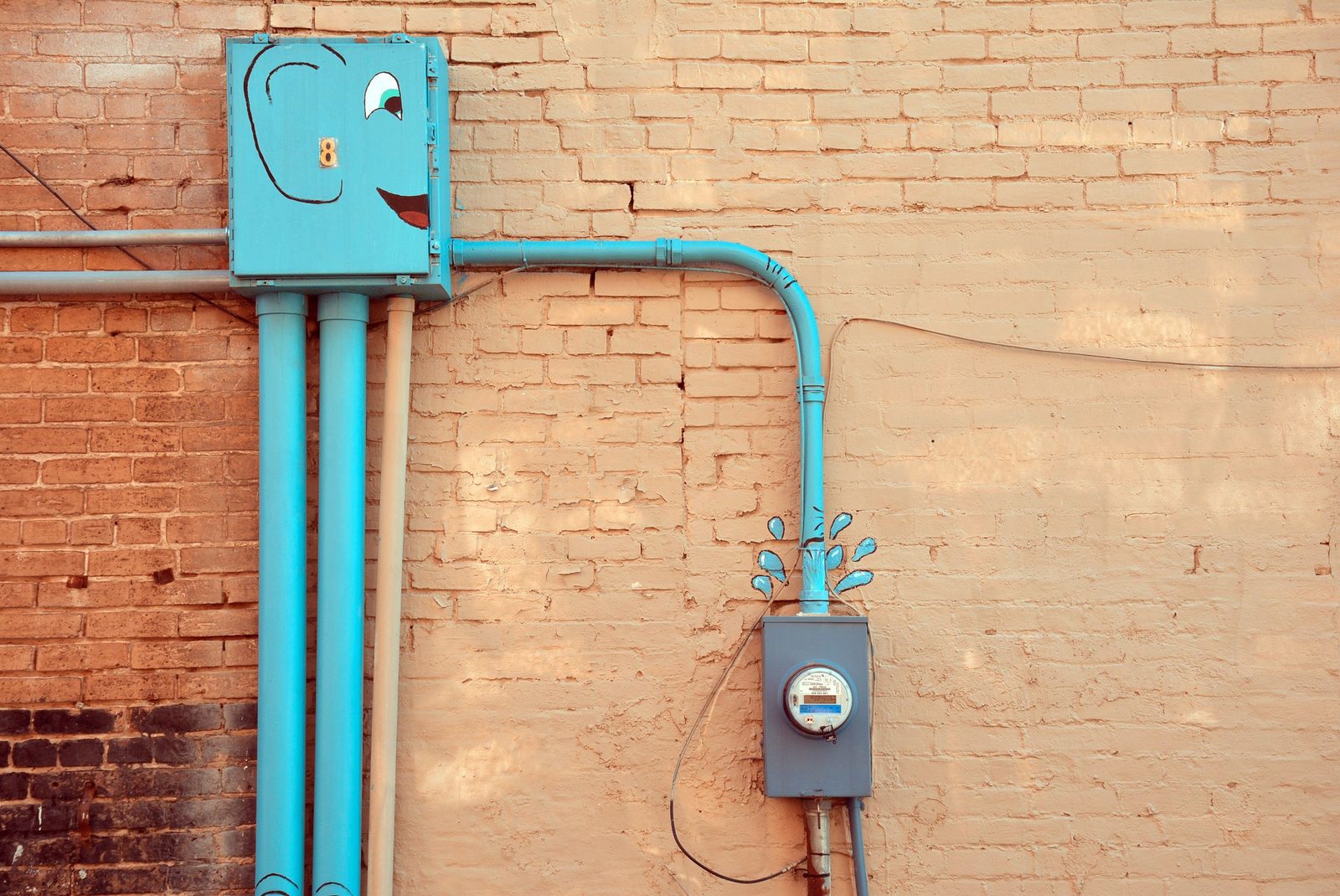
The meter and service entrance on the outside of a house. When the panel is original, the service cable and meter socket usually are too.
To replace the panel, we pull the meter in coordination with Duquesne Light, remove the old panel, mount a new panel from a current manufacturer, land every existing circuit on a new breaker, and label it. Any circuit that was double tapped gets its own breaker. New bedroom and kitchen circuits added during the job get the AFCI and GFCI protection the current code calls for.
The job is permitted and inspected. Inside the city that runs through Pittsburgh PLI; in the suburbs it's the borough or township. We handle the permit, the utility coordination and the inspection, so you're not making those calls.
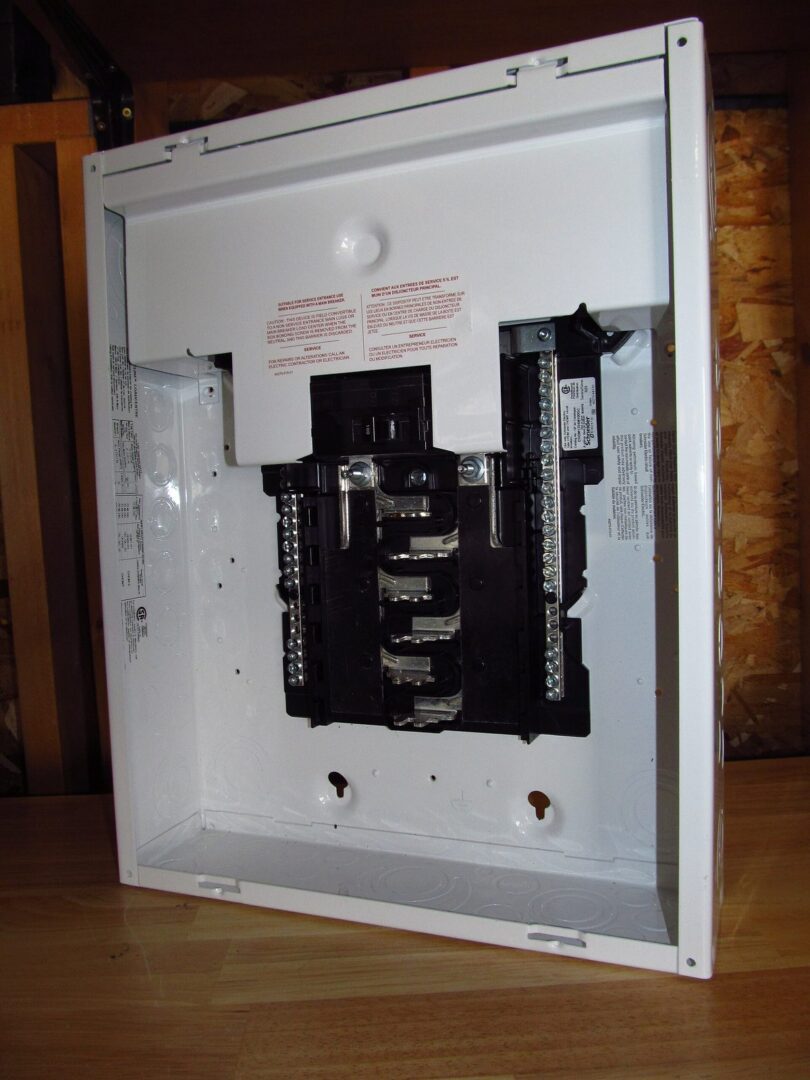
A modern panel with the breakers labeled and the branch circuits dressed neatly. This is what replaces a Federal Pacific or Zinsco panel.
Photo: Kevin Kiefuik, CC BY-SA 3.0, via Wikimedia Commons
Panel replacement or full service upgrade?
If the house has 100 amp service and you have no plans for an EV charger, a heat pump or an induction range, a like for like 100 amp panel replacement solves the safety problem. If the service is 60 amp, or you're already tripping breakers, or you're planning any of those loads, it makes sense to do a 200 amp service upgrade at the same time, since the panel is coming off the wall either way.
Two rules shape where the new panel goes. NEC 110.26 requires clear working space in front of the panel, 30 inches wide and 36 inches deep, with headroom, so a panel buried behind a furnace or a finished wall may need to move a few feet. NEC 240.24 does not allow a panel in a bathroom or a clothes closet, which matters in older houses where someone framed a closet around it. Both come from NFPA 70, the National Electrical Code, which Pennsylvania adopts through its Uniform Construction Code. We back every installation with our lifetime workmanship warranty.
Warning signs that move this from someday to now
- A burning or hot plastic smell near the panel, or breakers that are warm to the touch
- Buzzing or crackling from inside the panel
- Scorch marks on the cover or around a breaker
- A breaker that won't reset, or one that trips and the circuit stays live anyway
- A flagged inspection report on a house you're buying or selling
The first four on that list are an emergency call, not a scheduling question. If you're still unsure whether your panel is a problem, our post on the signs a Pittsburgh home needs a panel upgrade covers the rest of the checklist.
Frequently Asked Questions
What breaker is compatible with a Federal Pacific panel?
Aftermarket breakers listed to fit Stab-Lok panels exist, and surplus original FPE breakers are still sold online. We don't install either. A replacement breaker clips onto the same bus with the same stab connection, and the panel stays a Federal Pacific panel in the eyes of your inspector and your insurer. The right compatible part is a new panel.
Can you still buy Federal Pacific breakers?
Yes. Used and surplus FPE breakers and aftermarket Stab-Lok style breakers are sold through big box stores and online sellers, which makes people think the panel is still supported. It isn't. The original company stopped making residential Stab-Lok equipment decades ago, and new breakers only keep a known problem panel in service longer.
Can you sell a house with a Federal Pacific panel?
You can, but expect it to come up. The buyer's inspector will flag it, the buyer's insurer may refuse to bind a policy until it's replaced, and the buyer will usually ask for a credit or a replacement before closing. Sellers who replace the panel before listing avoid the negotiation and the risk of a deal stalling over insurance.
Do Federal Pacific panels need to be replaced?
No law requires it, and there was never a recall. Electricians widely recommend replacement anyway, because the CPSC confirmed the breakers fail UL calibration tests and the field record since then has been poor. Treat a Stab-Lok panel the way you'd treat a burning smell you can't find: not an emergency this minute, but not something to live with.
How do I know if I have a Zinsco panel?
Open the door and look for Zinsco, Sylvania, GTE-Sylvania or Magnetrip on the label, then look at the breaker handles. Zinsco breakers often have brightly colored handles, and a panel with a mix of red, blue and green handles is a strong sign. If you can see corrosion or melted spots on the bus where the breakers clip on, stop and call an electrician.
Will my insurance cover a home with a Zinsco or FPE panel?
It depends on the carrier. Some write the policy with no questions, some require replacement first, and some find out at a later inspection and send a non renewal notice. Ask your agent directly and get the answer in writing before you buy. If the answer is replace it, a licensed electrician's invoice and the passed inspection are usually what the carrier wants.
Not sure what's on your panel door? Send us a photo or request a free estimate and we'll tell you whether it's a Federal Pacific or Zinsco panel, what replacing it involves, and whether a service upgrade makes sense at the same time. For a panel that's hot, buzzing or smells like burning plastic, call 1-888-681-WIRE any hour.
Related Reading


Need an electrician in Pittsburgh?
Honest diagnosis, licensed work, clear pricing. Call us or schedule a visit online.