




Knob and Tube Wiring in Pittsburgh: Safety, Insurance, Rewiring
Knob and tube wiring is not an automatic emergency, but in a Pittsburgh house built before World War II it is rarely still safe the way we find it, and most insurers treat it as a problem to fix, not a quirk to live with. For the majority of homes we open up in Squirrel Hill, Mt. Lebanon, Sewickley or Edgeworth, the knob and tube needs to come out, circuit by circuit, and be replaced with modern grounded cable. That is a rewire, and it's what our house rewiring service in Pittsburgh is built around. Here's how to recognize it, what makes it risky, what your insurer is likely to say, and how a replacement works in a plaster and brick house.
Short answer: Original knob and tube that has never been spliced, buried in insulation or overloaded can still function. Almost none of it in Pittsburgh meets that description anymore. Plan on replacing it, starting with the circuits that are insulated over, spliced into, or feeding kitchens and bathrooms.
What knob and tube wiring is and how to spot it
Knob and tube was the standard way to wire a house from the 1880s into the 1940s. Instead of one cable with the hot, neutral and ground bundled together, each conductor runs by itself. White porcelain knobs hold the wires off the framing, and porcelain tubes line the holes where a wire passes through a joist or stud. There is no ground wire at all. Splices were twisted, soldered and wrapped with friction tape out in the open, not inside a junction box.
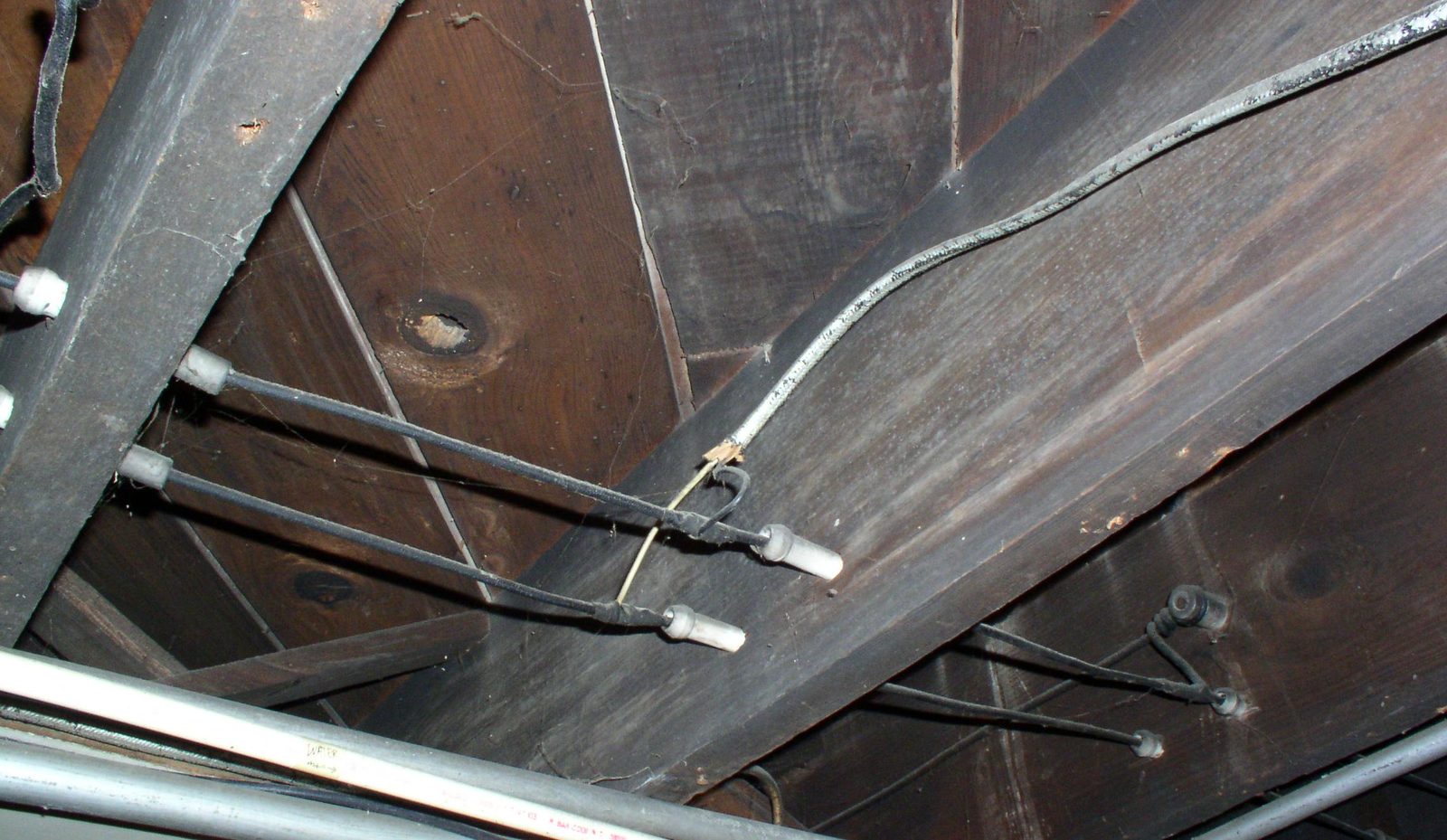
In Pittsburgh you'll usually find it from the basement. Look up at the joists near the panel for single black or gray cloth covered wires on white ceramic knobs, running in pairs a few inches apart. In the attic the same wires run along the rafters or across the ceiling joists. Behind a switch plate, two separate wires entering the box instead of one flat cable is another giveaway.
Most of the pre 1940 brick and frame houses in the city, Mt. Lebanon and the older parts of Sewickley and Edgeworth started life with it. Whether it is still live is a separate question, and the only way to know is to test.
Single insulated conductors held off the wood framing on porcelain knobs, with no ground wire anywhere in the run. This is what an original knob and tube circuit looks like from below.
Photo: me, CC BY-SA 2.5, via Wikimedia Commons
Is knob and tube wiring dangerous? What actually goes wrong
The wiring was designed for a few ceiling lights and maybe a radio, not window air conditioners, space heaters and hair dryers on one circuit. These are the failures we look for, roughly in order of how often we find them.
- Brittle insulation. The rubber dries out and cracks, especially in hot attics and near old light fixtures, leaving bare copper a fraction of an inch from dry wood lath.
- Buried in insulation. Knob and tube sheds heat into open air. When blown in cellulose or fiberglass batts were added to attics and walls in the 1970s and 1980s, the wires were often buried. NEC 394.12(5) does not permit knob and tube in hollow spaces of walls, ceilings and attics insulated with loose, rolled or foamed in place material that envelops the conductors. InterNACHI's knob and tube guidance quotes the same rule.
- Amateur splices. New Romex joined to old knob and tube with a wire nut and no box, hidden above a drop ceiling or behind a finished basement wall.
- Oversized fuses. Someone swapped a 15 amp fuse for a 30 so it would stop blowing. Now the wire carries more current than its insulation can take.
- No ground. Three prong outlets on two wire circuits look grounded and aren't.
- Heat from modern fixtures. Many new fixtures are marked for supply conductors rated 90 degrees C. Knob and tube insulation was never rated that high, so a sealed LED ceiling fixture on an old circuit cooks the wire inside the canopy.
The NFPA's National Electrical Code still contains Article 394 covering knob and tube, which is why it is not illegal to keep. It is allowed only under conditions most Pittsburgh houses stopped meeting decades ago.
Knob and tube wiring and homeowners insurance
Insurance is a common reason homeowners call about it. A buyer's home inspector finds knob and tube in the basement, the buyer applies for a policy, and the insurer either declines the house, asks for an electrician's inspection letter, or gives a deadline to have it removed. Existing owners hit the same wall at renewal when a company starts asking about wiring type.
Insurer practice varies by company, so ask your agent directly. The paths we see are full replacement before the policy is bound, a licensed electrician's written evaluation of which circuits are live and in what condition, or coverage with conditions and a higher premium.
What an insurer will not accept is a homeowner's word that it has been fine for years. What they usually will accept is documentation from a licensed contractor. At a free estimate we check whether any knob and tube is still energized, where it touches insulation and where amateur splices sit, then quote the rewire. That report often gets a policy written while the rewire is scheduled. A letter buys time; it does not make the wiring safe.
Knob and tube replacement: how a rewire works in a Pittsburgh house
Replacing knob and tube means running new grounded cable, usually NM-B copper, from the panel to every outlet, switch and fixture on the old circuits, then disconnecting the old wires and leaving them dead in place. What matters is that nothing is still feeding them.
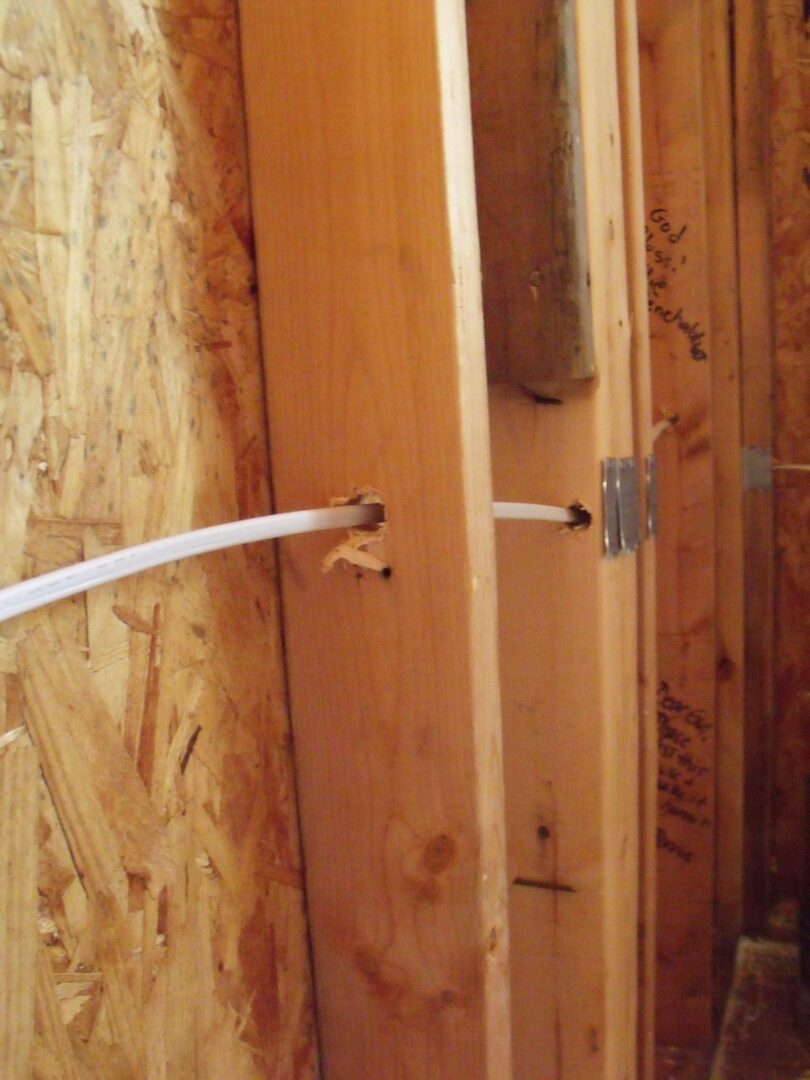
Pittsburgh houses make this a fishing job rather than a demolition job. Most of our pre war stock has a full basement below and an attic above, so we feed cable up from the basement to first floor boxes and down from the attic to second floor boxes. Plaster and lath walls get small openings at the box locations and occasionally at a fire block halfway up the wall, not long trenches. Brick houses with furred out plaster have shallow cavities, so we plan the routes before we drill.
Balloon framed houses are easier, since the stud bays run clear from basement to attic. Either way, we patch the openings we make, and a plasterer or painter finishes them.
New grounded cable is fished through the existing framing from the basement and attic, which keeps wall openings small and the plaster mostly intact.
Photo: Original photo: Amy Bonilla on Flickr Modified by Gazebo on July 21, 2015, with lossless optimization, the addition of comment and XMP-cc:License metadata, and the removal of JPEG IFD1 (thumbnail) metadata., CC BY-SA 2.0, via Wikimedia Commons
Partial rewire or whole house
If a previous owner already rewired the kitchen and second floor, the job may be a partial rewire of what is left. If a 60 amp fuse box feeds original knob and tube throughout, a whole house rewire with a new 200 amp service usually makes more sense. Our post on signs a Pittsburgh home needs a panel upgrade covers the fuse box side, and if a Federal Pacific or Zinsco panel feeds the old wiring, read why inspectors and insurers flag those breakers too. Here is how we order the work when a homeowner wants to phase it.
| Circuit condition | What it means | Priority |
|---|---|---|
| Buried in attic or wall insulation | Heat cannot escape; NEC 394.12 violation | Replace first |
| Spliced to Romex outside a box | Hidden connection with no fire containment | Replace first |
| Feeds kitchen, bath, laundry or window AC | Heaviest loads on the lightest wire | Replace first |
| Fuse larger than 15 amps on the circuit | Wire can overheat before the fuse opens | Correct the fuse now, replace soon |
| Open air in basement, light fixtures only | Closest to original design conditions | Replace last |
| Already disconnected at the panel | Dead wire, no hazard | Leave or remove for cosmetics |
Permits, inspection and Duquesne Light
A rewire is permitted work. Inside the city that goes through the Department of Permits, Licenses and Inspections (PLI); in Mt. Lebanon, Bethel Park, McCandless, Sewickley and the other boroughs and townships it goes through the municipality, since Allegheny County does not issue electrical permits itself. If the job includes a new service, Duquesne Light has to disconnect and reconnect at the meter. We handle the permit, the inspection and the utility coordination on panel and service work. Our walkthrough of panel upgrade day shows how that part goes.
What drives the cost of knob and tube replacement
Two houses on the same street in Brookline can be very different jobs. What moves the number:
- How many circuits are still live.
- Access. Open basement and walkable attic versus finished basement or a flat roof with no attic.
- Wall construction. Plaster on wood lath fishes well. Plaster on brick or metal lath is slower and needs more openings.
- Whether the panel and service come with it. Many Pittsburgh rewires are paired with a 100 to 200 amp service upgrade because the fuse box is as old as the wiring.
A free estimate after a walkthrough is the only honest way to price it. If the house also has aluminum branch wiring from a later addition, we fold both into one plan.
Buying or selling a house with knob and tube in Pittsburgh
Sellers: get an electrical evaluation before listing. Knowing which circuits are live, with a quote in hand, keeps a buyer's inspection report from turning into a renegotiation. Some sellers rewire before listing; many price it in and disclose it.
Buyers: a home inspector will flag knob and tube but usually cannot tell you how much of it is energized. Have an electrician trace it during your inspection period, then talk to your insurance agent before the contingency expires, not after.
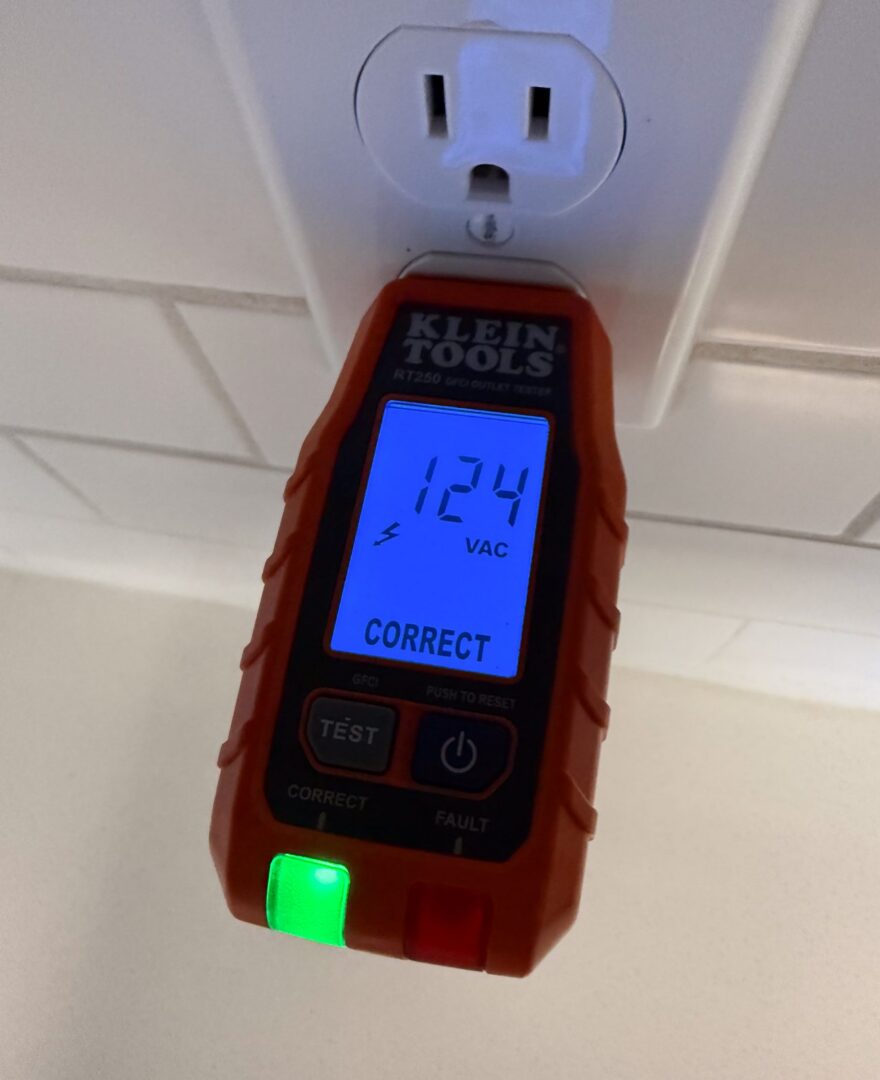
A rewire ends at a modern breaker panel with every circuit labeled, grounded and protected, which is what an insurer and a home inspector want to see.
Photo: Tony Webster, CC BY-SA 4.0, via Wikimedia Commons
If you already own the house, the right move is still an evaluation. Knob and tube fails quietly, inside a wall, and the first sign is often a warm switch plate, a flickering fixture or a fuse that keeps blowing.
Frequently Asked Questions
Is knob and tube wiring copper?
Yes. Knob and tube conductors are solid copper, which is why the metal usually survives a century. The hazards come from the aged rubber and cloth insulation, open splices, the missing ground, oversized fuses and decades of modifications, not from the copper.
How do you replace knob and tube wiring?
We run new grounded cable from the panel to every box on the old circuit, fishing it through the basement and attic to keep wall openings small, then disconnect the old wires at the panel and leave them dead in place. The work is permitted and inspected. In a Pittsburgh plaster house, expect a few small patches per room rather than open walls.
Will my insurance company cover a house with knob and tube wiring?
It depends on the company. Many insurers decline homes with active knob and tube, some require a licensed electrician's inspection letter, and some write the policy with a deadline to replace it. Ask your agent directly. A written electrical inspection from a licensed contractor is usually what gets a policy issued while the rewire is scheduled.
Can I add insulation to an attic that has knob and tube wiring?
Not over live knob and tube. The wiring depends on open air to shed heat, and NEC 394.12 does not permit it in spaces insulated with loose, rolled or foamed in place material that envelops the conductors. Replace or disconnect the circuits in that attic first, then insulate.
Is knob and tube wiring illegal in Pennsylvania?
No. The National Electrical Code still includes Article 394 and permits existing knob and tube under specific conditions, and Pennsylvania has no law requiring removal. The practical pressure comes from insurers, from inspectors on permitted work, and from the code rules on insulation contact and grounding that most old installations no longer meet.
If you've found knob and tube in your basement, or an insurer has asked for a letter, we'll trace every circuit and give you a straight answer on what is live, what is safe and what needs to go. Request a free estimate or call 1-888-681-WIRE to schedule a walkthrough.
Related Reading


Need an electrician in Pittsburgh?
Honest diagnosis, licensed work, clear pricing. Call us or schedule a visit online.