



Breaker Box Replacement in Pittsburgh: What Drives the Job
What drives a breaker box replacement in Pittsburgh is not the box itself. It's the condition of the panel you have now, the size of the service feeding it, the wiring landing in it, where it sits in the house, and the permit and utility steps that come with the job. Those five things decide whether you're looking at a straightforward panel swap or a full electrical service upgrade in Pittsburgh with a new meter socket and mast. Here is what an electrician is weighing when they stand in your basement and look at that gray door on the wall.
Short answer: The panel's condition, whether the service entrance changes with it, the wiring, the location, and the permit and Duquesne Light steps drive the job. We quote it free after seeing the panel in person.
When a breaker box actually needs replacing
A single tripping breaker is usually a circuit problem, and a full panel can sometimes take a sub-panel instead. Replacement is the right call when the panel itself is the hazard or the bottleneck:
- A flagged brand. Federal Pacific Stab-Lok, Zinsco, and some Sylvania and Challenger panels have breakers with a reputation for failing to trip. Our post on Federal Pacific and Zinsco breakers covers why inspectors and insurers flag them.
- Heat, water or corrosion. Scorched bus bars, melted breaker faces, rust on the cabinet, or green crust on the lugs mean the panel has been through something it was not built to survive.
- A fuse box. Screw-in fuses still work, but a fuse box almost always comes with a 60 amp service and no room for today's loads.
- No room and no capacity. Double-tapped breakers, tandems crammed where they don't belong, and a 100 amp main that can't take an EV charger or heat pump. Our double-taps and overcrowded panels post explains when a rebuild beats a patch.
If you're unsure which bucket you're in, signs your Pittsburgh home needs a panel upgrade is the place to start.
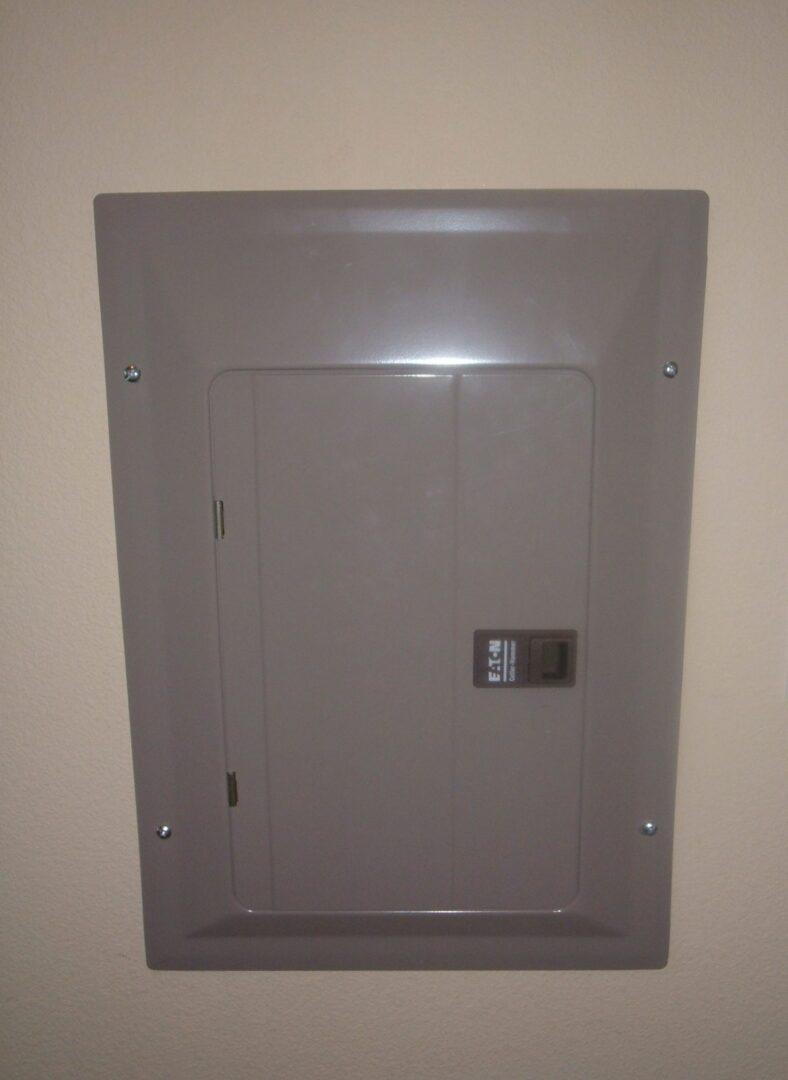
The first thing we do at an estimate is pull the cover and look at the bus bars, the main lugs and the back of the breakers. A panel can look fine from the outside and be badly pitted inside, especially in a damp Pittsburgh basement where the cabinet has been sweating against a stone wall for sixty years.
We also check the main breaker rating against the service wire and meter, count the circuits, and note any breakers that are warm to the touch or that don't match the panel brand. Those few minutes decide most of what follows.
Corrosion and heat damage inside a panel are reasons to replace the cabinet rather than swap individual breakers.
Photo: BrokenSphere, CC BY-SA 3.0, via Wikimedia Commons
What drives the scope of a breaker box replacement in Pittsburgh
Two homes can both need a new panel and end up with very different jobs. Here is what moves the scope.
| Factor | Smaller job | Bigger job |
|---|---|---|
| Service size | Same amperage, panel only | 60 or 100 amp to 200 amp: new service conductors, meter socket and often the mast |
| Service entrance | Socket and mast sound and sized for the new main | Rusted socket, undersized mast, or an overhead drop Duquesne Light needs to move |
| Grounding and bonding | Ground rods and water bond present | No grounding electrode system, or a water bond lost to plastic plumbing |
| Wiring condition | Modern cable with slack to land cleanly | Knob and tube, cloth covered or aluminum circuits needing splices or a junction box above the panel |
| Location | Panel stays put with legal clearance | Panel in a bathroom, closet or crawl space and has to move |
| Circuit count | Twelve to twenty circuits, all identified | Forty unlabeled circuits with sub-panels fed from it |
Panel swap or full service upgrade?
A like-for-like swap keeps the meter, service wire and main breaker size and replaces only the cabinet and breakers. It fits when the service is already 200 amp and the panel is simply old or a flagged brand. A service upgrade replaces everything from the weatherhead to the panel. Most Pittsburgh homes built before 1970 that still have their original 60 or 100 amp service land in the second group, because the homeowner wanting a new panel is usually also planning an EV charger, a heat pump or a kitchen remodel. Our guide to 100A vs 200A vs 400A service helps you size it once instead of twice.
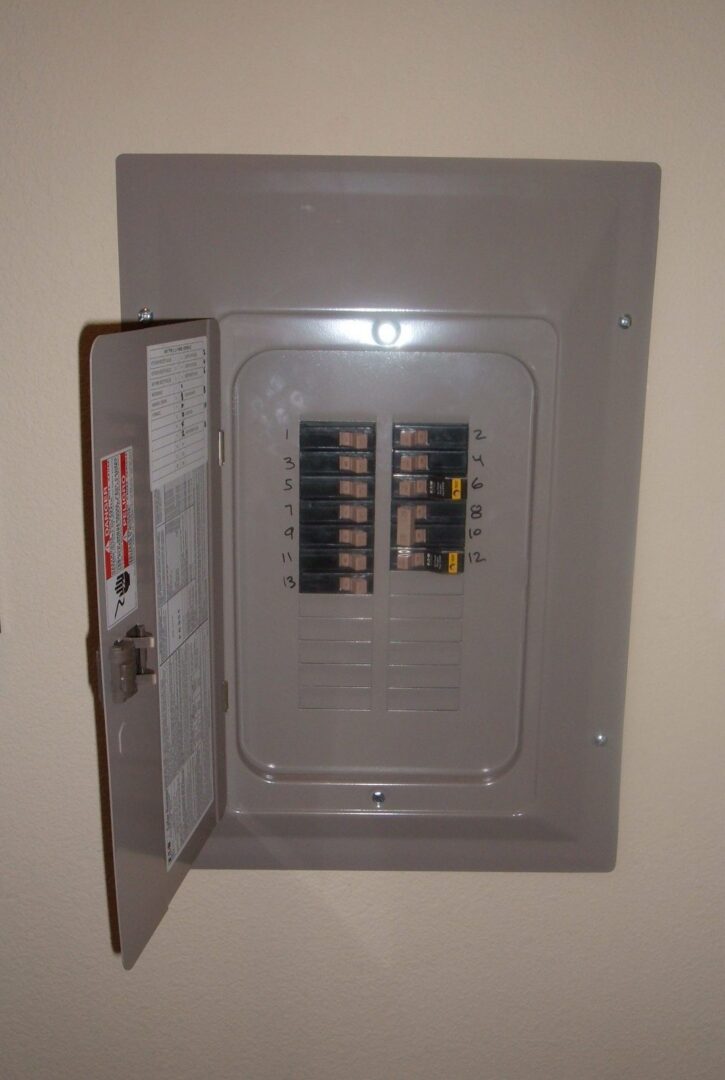
A properly finished panel has three things you can check yourself: a circuit directory that names rooms and appliances, not just "lights"; conductors that enter through proper connectors and are not pinched at the knockouts; and empty slots left for whatever you add later.
We install panels from the major manufacturers and source the materials direct, and every installation carries our lifetime workmanship warranty. We also leave open spaces for the circuits you add later.
A new panel should have every circuit labeled, conductors landed without crowding, and open space left for future breakers.
Photo: BrokenSphere, CC BY-SA 3.0, via Wikimedia Commons
How Pittsburgh houses change the job
The housing stock around here shapes panel work more than national cost guides admit:
- Brick homes from the 1920s to 1960s with plaster walls and a panel tucked at the bottom of the basement stairs or behind the furnace. Working space is often the first problem.
- Stone foundation basements that stay damp. Cabinets rust from the back, and the ground clamp on the water pipe is often corroded loose.
- Steep lots and overhead drops. On hillside streets in the South Hills and North Hills the drop may come in at an odd angle, which affects where the new mast can go.
- Detached garages on alleys, fed by a single cable buried decades ago. A new panel is the moment to run a proper feeder, as we cover in when your home needs a sub-panel.
Winter matters too. Mast work in January is slower and reconnect windows get tighter, so schedule a borderline panel before the cold sets in.
Permits, Duquesne Light and inspection
A breaker box replacement is permitted work everywhere in our service area. Inside the city limits the permit goes through the City of Pittsburgh's Department of Permits, Licenses and Inspections. Outside the city it goes through your borough or township, since Allegheny County does not issue electrical permits itself. We pull the permit, schedule the inspection, and coordinate the disconnect and reconnect with Duquesne Light (or West Penn Power for the few outlying homes it serves).
Power is cut at the meter or pole before the old panel comes off the wall, and the new service is not reconnected until the inspection has passed. A contractor who skips the permit leaves you with an unrecorded panel that surfaces at your next home sale or insurance renewal. Pennsylvania requires home improvement contractors to register with the PA Attorney General; ours is PA-032900, and you should ask any electrician for theirs. For how the day unfolds, read what panel upgrade day looks like.
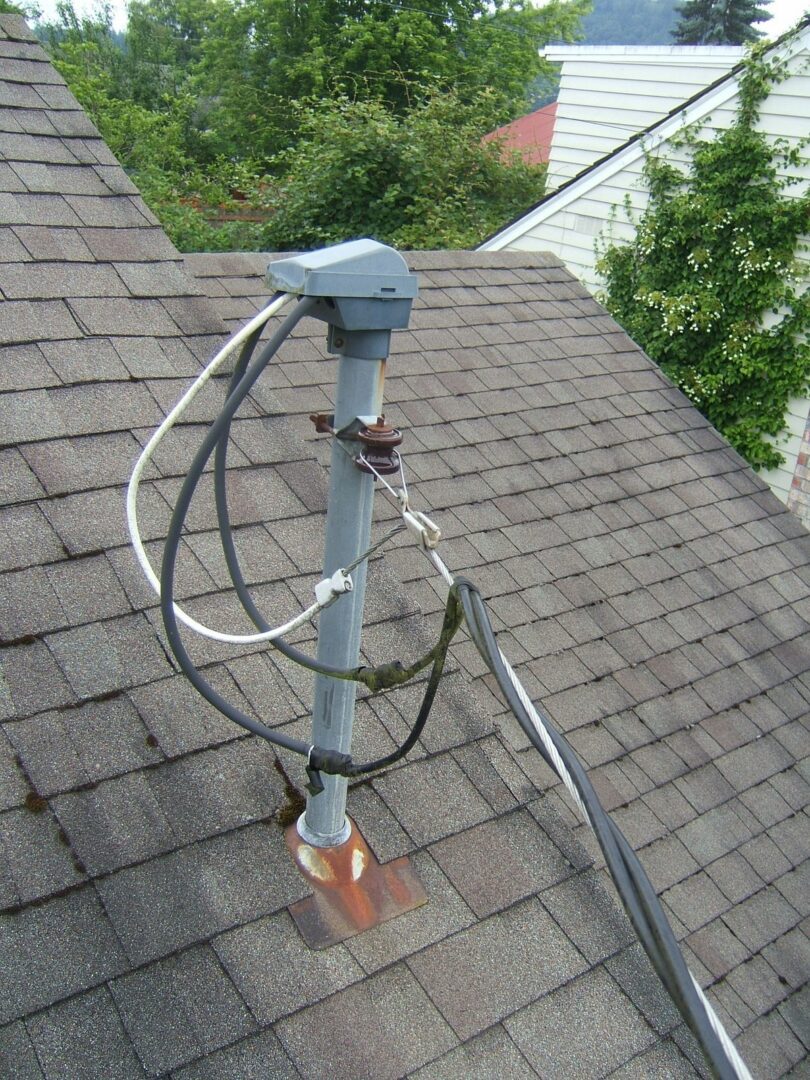
Whether the meter socket changes is one of the first questions we settle. Duquesne Light owns the meter; the socket, the mast and the service entrance conductors belong to the homeowner and have to meet both the National Electrical Code and the utility's own service requirements.
On a like-for-like panel swap the socket usually stays. On a 200 amp upgrade it is replaced along with the mast and the conductors, and the utility reconnects to the new equipment after inspection. We handle that scheduling so you are not the one calling in.
The meter socket and mast are part of the service entrance and are replaced when the service is upsized, not just the panel.
Code items that come along with a new panel
Replacing the panel pulls the service up to current code. These rules most often add work, with the NEC articles behind them.
Working space and location (NEC 110.26 and 240.24)
You need clear space in front of the panel: at least 30 inches wide, 36 inches deep and 6.5 feet of headroom, not used for storage. Overcurrent devices also can't be in a bathroom or clothes closet. A panel squeezed beside a furnace or walled into a closet during a remodel often fails this, and moving it a few feet is sometimes the only fix.
Grounding and bonding (NEC Article 250)
A new service needs a complete grounding electrode system, normally two ground rods plus a bond to the metal water pipe where it enters the house, with the neutral bonded to the cabinet only at the service. Many older homes have none of this.
AFCI and GFCI breakers (NEC 210.12 and 210.8)
A panel swap alone does not force every circuit onto arc fault breakers, but any branch circuit extended or modified during the job generally needs AFCI, and kitchen, bath, garage, basement and outdoor circuits need GFCI. These breakers take more room, which is why a 20 space panel from 1965 becomes a 40 space panel today.
Surge protection and the outside disconnect
The 2020 NEC added a surge protective device requirement at dwelling services, including when service equipment is replaced, and an emergency disconnect on the outside of one and two family homes. Which edition your municipality enforces decides whether these apply; we sort that out on the permit. Either way, a panel replacement is the easiest moment to add whole home surge protection.
Terminal torque is something homeowners never see and inspectors increasingly check. Every lug in the panel has a torque value stamped on it or printed in the instructions, and NEC 110.14(D) requires that it be met with a calibrated tool.
Loose lugs are the root of most warm breakers and melted bus bars we find in old panels. Doing it right on a new panel is a few extra minutes per connection and the difference between a panel that lasts decades and one that starts buzzing in five years.
Frequently Asked Questions
What is the 80 percent rule for electrical panels?
Breakers are designed to carry 80 percent of their rating for continuous loads, which the NEC defines as loads lasting three hours or more. That is why a 40 amp EV charger goes on a 50 amp breaker and why we size a new panel against your real loads, not just the number stamped on the main breaker.
Can I replace a circuit breaker myself instead of the whole panel?
A single breaker can be replaced, but it has to be the brand and type listed for your panel, and the bus stays live even with the main off. If the breaker failed because the bus behind it is pitted or the panel is a flagged brand, a new breaker only hides the problem. Have an electrician look at the bus first.
How do I find the electrical panel in my house?
In most Pittsburgh homes it's in the basement on the wall closest to the meter, often near the bottom of the stairs or behind the furnace. Look for a gray or beige metal door about the size of a cereal box, and follow the thick cable in from the meter if you're not sure.
Can a fuse box be upgraded to a breaker panel?
Yes, and it's one of the most common replacements we do. A fuse box almost always sits on a 60 amp service, so the upgrade usually includes new service conductors, a new meter socket and a 200 amp panel. Our post on sizing your service covers how big to go.
What drives the cost to replace an electrical panel?
Mainly whether the service size changes, whether the meter socket and mast are replaced, the condition of the existing wiring, whether the panel has to move for clearance, and the number of circuits and AFCI or GFCI breakers required. The free estimate puts those pieces in writing for your specific house.
If your panel is a flagged brand, out of space, or just older than you are, we'll come look at it and give you a free written estimate. Request a free estimate or call 1-888-681-WIRE (9473).
Related Reading



Need an electrician in Pittsburgh?
Honest diagnosis, licensed work, clear pricing. Call us or schedule a visit online.